

This month, Beau Lebens, Artistic Director of Woo, was on stage at the annual Stripe Sessions conference to talk about agentic commerce.
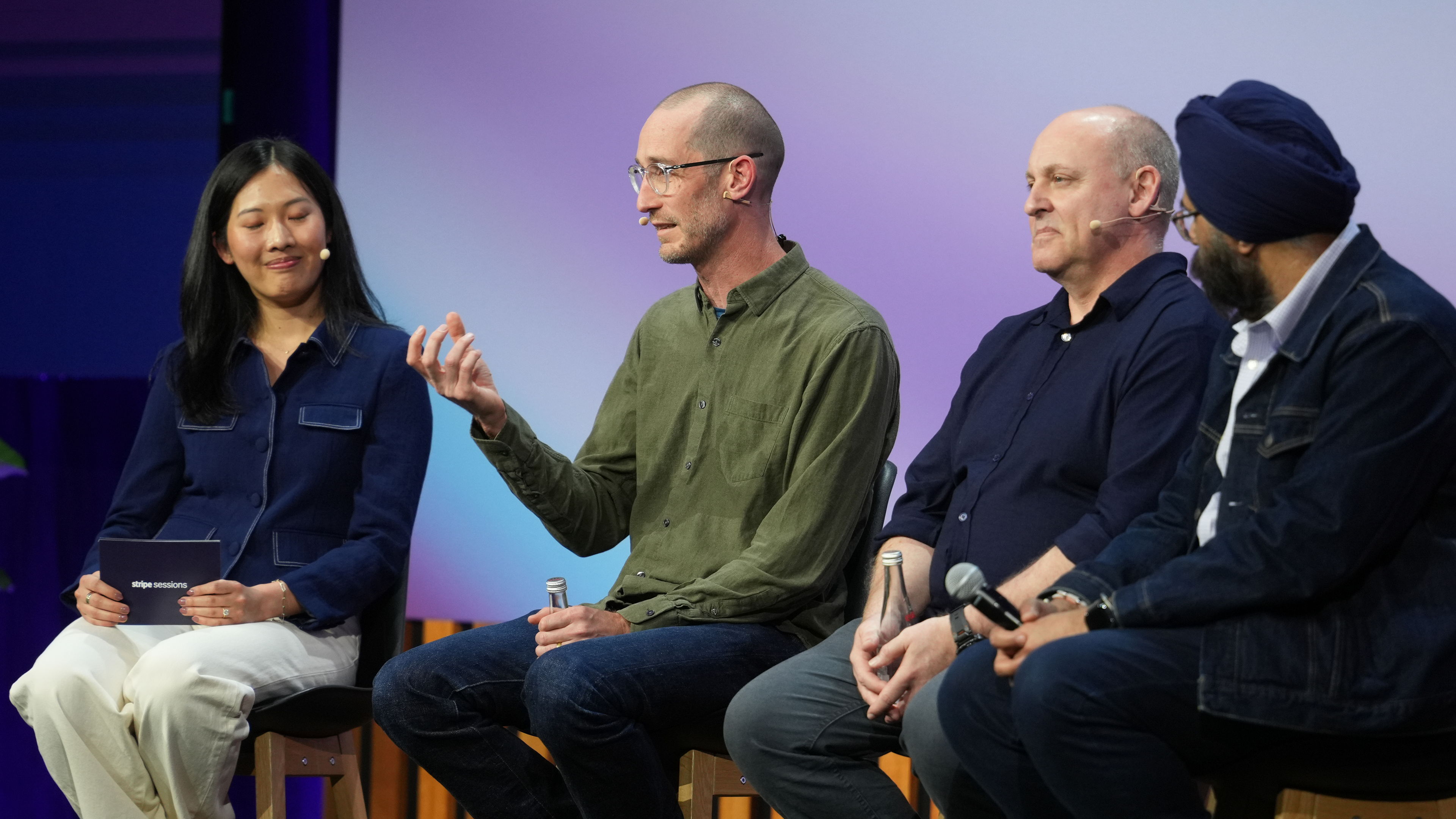
While much of the conversation around AI-powered shopping focuses on the consumer experience, this panel dove into what it actually takes to implement these systems — from real-time data synchronization to fraud prevention to preserving brand identity in conversational interfaces. The panel also featured Mandeep Bhatia of Tapestry and Kyle Dorcas of Ashley Global Retail, and was moderated by Allison Xu of Stripe.
The full panel discussion is worth a watch, but we wanted to highlight a few of the key insights from Beau, lightly edited for clarity.
Platform responsibility and discovery
When asked about what kicked off Woo’s investment in agentic commerce and what the platform is hearing from merchants, particularly small and medium businesses, Beau explained how the shift represents both a challenge and an opportunity:
For us as a platform, we see it as our responsibility to enable our merchants to be where their customers are, to run their businesses effectively.
They’re looking to us to provide the solutions so they can get access to this new distribution and sales channel. From their perspective, the biggest thing we’re hearing initially is they’re seeing some of their organic traffic disappear because it’s shifting to LLMs. So they’re wondering, how do we either get that back or be a part of where it is now?
That discovery and distribution mechanism is really important for them. And as their platform provider, we’re in the position to say, here are all of the emerging protocols, here are the systems that you need to be a part of. And we can set that up in a way that they can just hit a button and turn it on.
Beau Lebens
Technical challenges: real-time data vs. scale
The conversation turned to the technical challenges of implementing agentic commerce. Beau discussed where Woo focuses its engineering resources vs. where it makes sense to partner with specialized providers:
We do a lot of partnering, including with Stripe. Stripe is very central to parts of the actual transaction process in particular. Those are some of the gnarliest technical pieces of exactly how we navigate these transactions. Things like catalog and ingestion of all the product attributes, that’s not particularly complex. It’s a scale challenge, but we’ve been doing content syndication for decades on the web.
What’s uniquely difficult is how real-time it needs to be. It’s one thing to ingest the full catalog or even a partial catalog of a complex merchant, but if you go search in an LLM today, you’ll find a lot of catalog materials that’s actually two, three years old. When it comes time to make an actual purchase, that doesn’t cut it. Down to the second might not cut it if there’s a flash sale or inventory update. So getting that real actual live data is the unique part of the technical challenge.
Beau Lebens
Fraud and brand commodification risks
When asked about his biggest concerns for the future of agentic commerce, particularly from a platform perspective representing thousands of diverse merchants, Beau identified two key risks:
As a platform, we’ve had completely open APIs, and we give our merchants a lot of access to all of their data, all of their customization. Something that we stayed away from historically is APIs that enable actual transactions.
It was always because the technology wasn’t really there, but also because there was this known potential vulnerability, this potential security risk. That’s probably the big one that stands out as a platform—as an industry, we need to make sure that this is all super secure and that doesn’t get in the way of the experiences that we’re trying to create.
On behalf of the merchants, we’ve talked a little bit about brand voice and representation. Most of our merchants choose our platform because it’s customizable, because they can really choose how they portray themselves on the web. I fear that we lose some of that as we switch to these agentic transactions and experiences, and everything becomes kind of commodified down to just ask a question, perform a transaction.
That’s ultimately not good for merchants. They might sell some things, and that’s great for folks selling commodity goods. But we have merchants who are selling really unique, interesting, bespoke products. They’re often very niche. A part of their whole modus operandi is having a really loud brand voice. And that gets diluted in this environment.
Beau Lebens
Beau’s advice: think of it as just another channel
In a rapid-fire closing segment, panelists were asked to share their best advice for new sellers looking to start with agentic commerce. Beau offered a pragmatic perspective:
Definitely get in there soon and use these tools, understand how they work, experience AI for yourself. I’d say don’t be scared of this as something that’s completely alien or completely new.
A relatively simplistic way of looking at it is this is just another channel. Yes, it’s a different channel. Yes, some of the dynamics are different, but it’s just another channel. Just think about it as a new way to sell your products. What do they need to look like? How do they need to be distributed into this channel? What are the purchasing dynamics that happen there?
Beau Lebens
Agentic commerce represents a fundamental shift in how customers discover and purchase products online. It’s one aspect of a larger shift in how all users expect to interact with software. From our work on the WooCommerce MCP and Abilities API to agentic commerce protocols, the Woo team has been shipping the foundational pieces in WooCommerce for an extensible, ecosystem-wide AI experience.
Watch the full panel discussion online and share your thoughts on agentic commerce in the comments below.
Leave a Reply